

A useful kitchen joinery quote starts with a clear brief, not a perfect drawing. Describe the room, the work you want included and the things your current kitchen makes difficult. Add photographs, indicative dimensions and appliance information, then separate confirmed decisions from ideas. This gives the supplier a better basis for questions and reduces the chance of comparing prices for different jobs.
Explain what is staying and what is changing
Start with one paragraph about the project. Is this replacement cabinetry in an existing layout, a new kitchen in an extension or a wider renovation? Note whether the sink, cooking area and refrigerator are expected to stay in their current positions. Moving services can change the surrounding work even when the cabinet arrangement looks similar.
Identify what you want to keep, including flooring, splashbacks, benchtops and appliances. Do not assume retained items can always be removed or reused without damage. Ask the relevant trades to assess that possibility before treating reuse as a confirmed saving.
Provide a practical room information pack
Photograph each wall straight on, then take wider photographs showing doorways, windows and adjacent circulation areas. Include close-ups of awkward corners or services that affect the cabinetry. A rough room sketch can help everyone understand the photographs; label it as indicative rather than a production drawing.
- Mark doors, windows, ceiling changes and visible service locations.
- Note approximate wall lengths and the direction that doors open.
- Describe access through lifts, stairs, corridors or narrow entries.
- Identify any uncertain measurements or concealed conditions.
- Ask who is responsible for the final site measure and approval.
These details support initial discussion. They do not replace professional verification of the finished site conditions before manufacturing.
Name appliances rather than describing their category
“Standard dishwasher” is not a complete specification. Provide the make and model of appliances already selected and attach the manufacturer's current installation information. For items not yet chosen, mark the selection as pending. Refrigerators, ovens, cooktops and integrated appliances can influence openings, ventilation and neighbouring storage.
Make a simple schedule showing whether each appliance is existing, ordered or undecided. Add who supplies it and who coordinates installation. If you plan to change models later, ask how that affects drawing approval and manufacturing rather than assuming the replacement will fit.
Turn storage frustrations into requirements
List the activities that matter most. Examples include unpacking bulk groceries, preparing school lunches, baking or sharing the kitchen with another cook. Follow each activity with a practical need: a home for tall bottles, access to heavy cookware or somewhere for reusable containers and lids.
Choose three priorities and rank them. A longer wish list is useful, but priority order gives the designer a way to make sensible trade-offs when space or budget is limited. Include items that need to remain accessible without repeatedly moving other things.
Define the finish and the scope separately
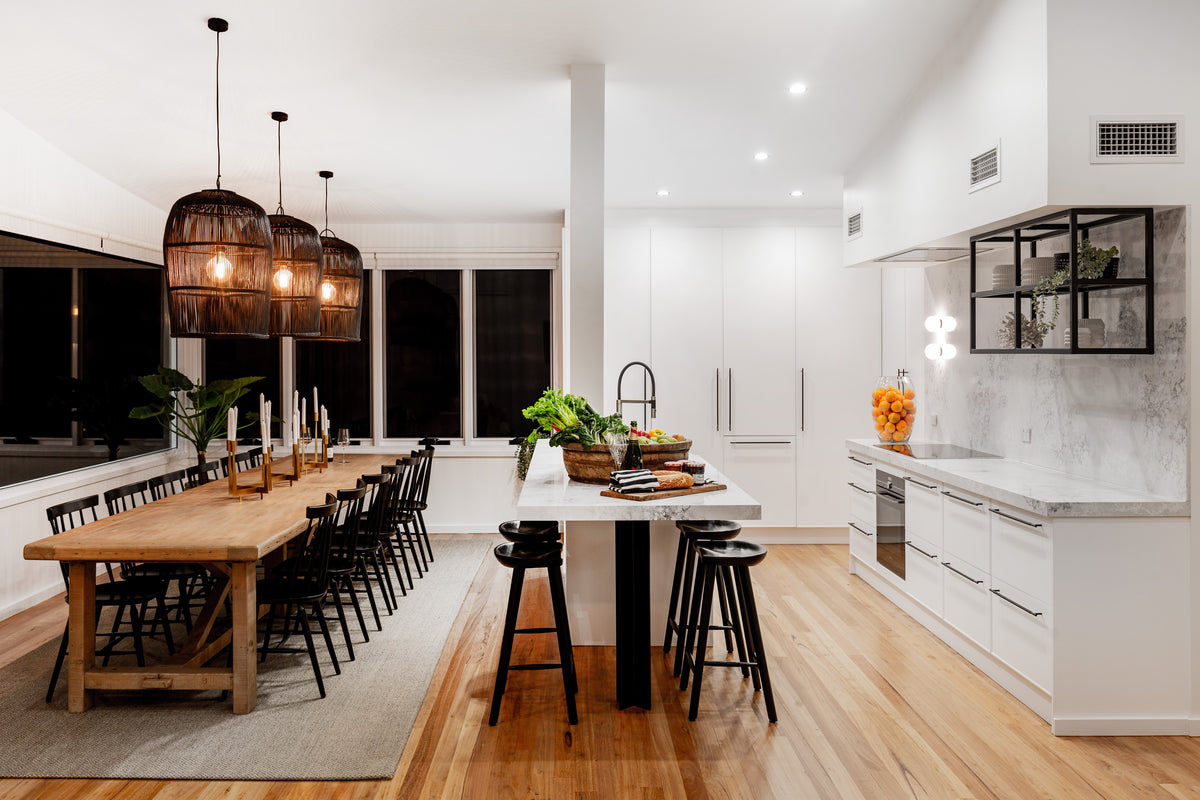
Reference photographs communicate appearance, but they do not establish a material specification. Say what you like about each image: colour, door profile, visible handles or the balance of open and closed storage. Ask for proposed materials, finishes and hardware to be named in the quote.
Then request an explicit scope breakdown. Design, supply, assembly, installation, demolition, disposal, benchtops, splashbacks and trade coordination should not be treated as interchangeable inclusions. Ask which are included, excluded or awaiting another supplier's price.
Send a brief that is easy to answer
Finish with your budget range, desired timing and any dates dependent on other work. Ask whether that timing is feasible; a preferred date is not a confirmed programme. Name the person who will approve drawings and collect questions into one list.
Keep the initial pack organised with a dated sketch, clearly named photographs and an appliance schedule. When a decision changes, send a revised version rather than leaving conflicting instructions across messages. A concise, consistent brief helps the conversation move from broad inspiration to a quote you can understand.
Plan your next step
Explore kitchen joinery services, compare ready-made cabinet options and review handle styles. Send your brief through the enquiry page and identify the decisions you still need help with.